
Why Porcelain Changed the World
An exploration of how porcelain reshaped global trade, aesthetics, diplomacy, and cultural exchange from the Ming dynasty to the modern world.
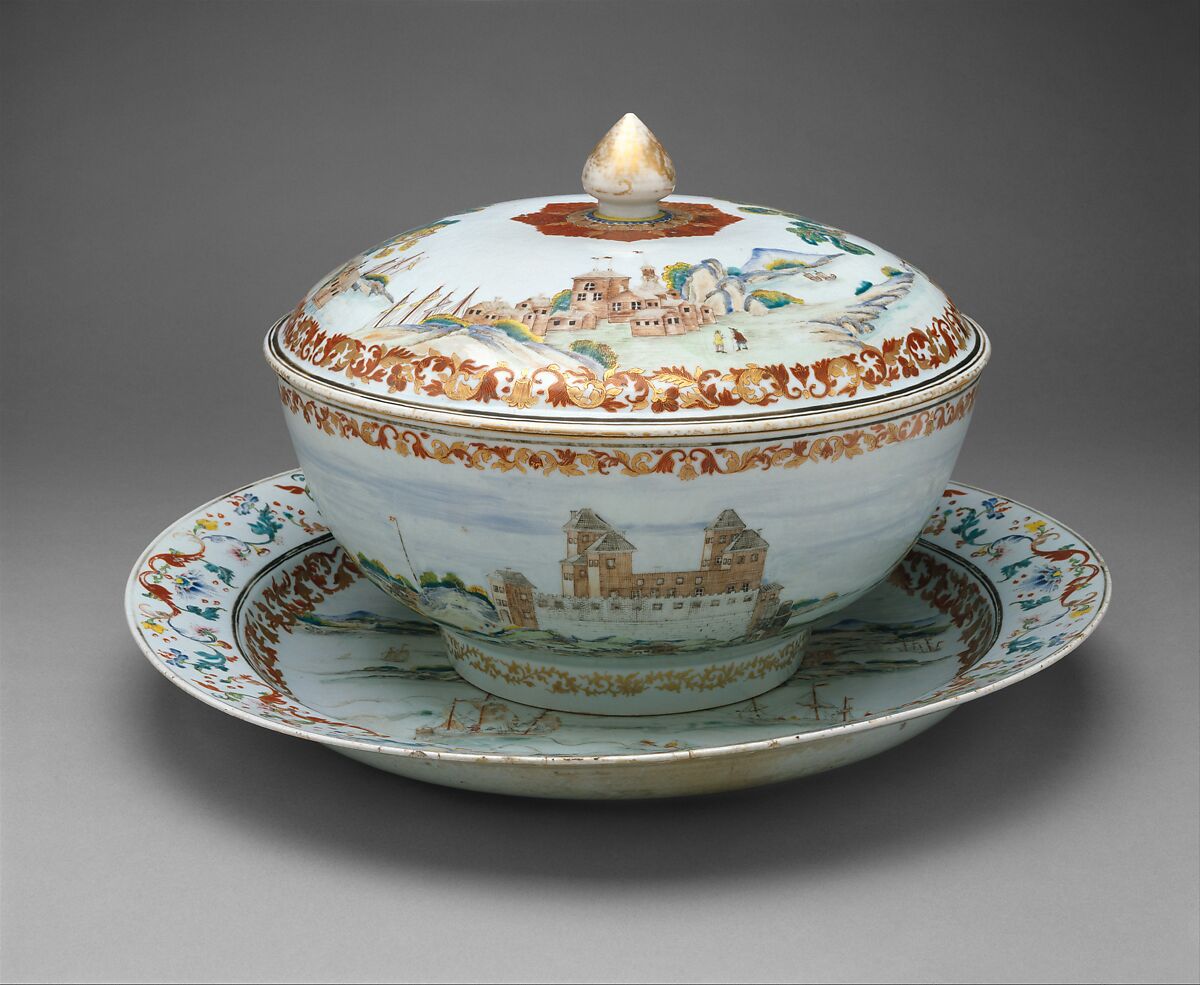
Some materials serve civilizations.
A few reshape them.
Porcelain belongs to the latter.
Long before it became a subject of connoisseurship, porcelain had already transformed how people ate, drank, displayed, gifted, and remembered. It quietly redefined the relationship between daily life and refinement, between function and beauty, between the ordinary and the enduring.
What made porcelain different was not only its appearance, but its idea.
For centuries, China developed a material that was at once strong and delicate, practical and poetic, humble and luminous. Porcelain could serve a meal, yet also command a room. It could be used every day, yet preserved for generations. It collapsed the boundary between utility and art.
When porcelain began to travel westward in large quantities from the 16th century onward, Europe did not merely discover a new kind of object. It encountered a new standard.
In a world of metal, wood, and glass, porcelain appeared almost impossible: lighter, purer, more resonant, and more precise. It could hold heat without burning the hand. It could carry color without dullness. It could endure time without losing clarity.
Rooms were built for it.
Collections were formed around it.
New industries were created in an attempt to imitate it.
But more importantly, habits changed.
Meals became rituals.
Tables became stages.
Interiors became expressions of taste and identity.
Porcelain did not simply decorate life. It organized it.
Yet what truly distinguishes porcelain in the history of objects is not its technical perfection, but its cultural role.
Porcelain traveled farther than most ideas. It crossed oceans before many books did. It entered palaces, merchant houses, and eventually middle-class homes. It became one of the first truly global objects — understood, desired, and valued across civilizations.
And in this journey, it did something remarkable: it absorbed meaning.
In China, porcelain expressed balance, discipline, and harmony.
In Europe, it became a language of status, taste, knowledge, and worldliness.
In the Americas, it came to signify participation in a wider world.
It was never just a container.
It was a carrier.
Of color.
Of symbols.
Of memory.
One of the senior craftsmen we work with once said during a discussion:
“The clay remembers everything. The kiln decides what may remain.”
This is perhaps the quiet power of porcelain.
It records human intention.
It submits to time.
And if it survives, it outlives its maker.
Few materials allow this kind of relationship between hand, fire, and history.
Porcelain does.
And this is why, even today, long after it has ceased to be rare, porcelain remains unmatched in one essential way:
It is not merely something we use.
It is something we entrust.
Begin a
Conversation.
Every meaningful cultural engagement begins with a conversation.