
Porcelain as Civilization, Memory, and Global Language.
One material. A thousand years. Six continents.
One material, across one thousand years.
For more than a thousand years, porcelain has traveled across continents — shaping how people live, eat, gather, and remember.
Few materials have moved so far, for so long, in such quantity — and almost none have carried so much meaning along with their freight.The chapters that follow trace that movement, and the cultural weight it carried.— editorial note
Live.
Cups, bowls, vessels. The architecture of the everyday.
Eat.
The service set as a script — the order of the meal made material.
Gather.
Tea, hospitality, diplomacy. The porcelain object as a social instrument.
Remember.
Heirlooms, inscriptions, commemorations — objects asked to outlive their owners.
From kilns to courts — a global language.
From imperial kilns in Jingdezhen to European royal collections — porcelain became one of the earliest global luxury goods.
It was, equally, one of the most powerful cultural ambassadors China ever produced: a language understood across courts that did not otherwise speak. For three centuries, ships left Canton heavy with crates of porcelain destined for Lisbon, Amsterdam, London, Boston. The cargoes paid for the journey, and shaped the homes they reached.

His passion for Chinese porcelain helped shape Europe’s royal collecting tradition.
Louis de Silvestre
PUBLIC DOMAIN · WIKIMEDIA COMMONS
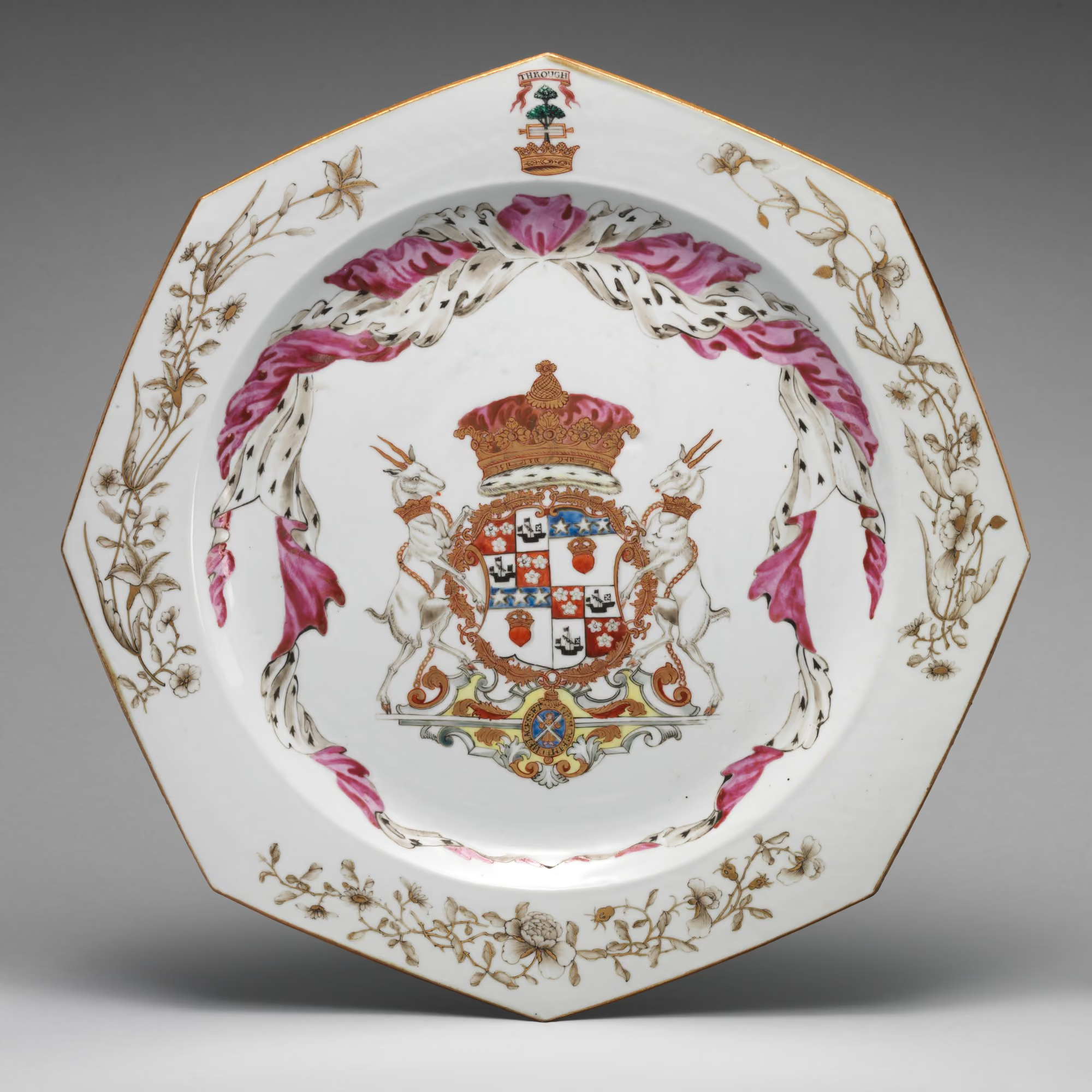
Armorial porcelain
stands apart.
Objects made in China that carried European family identities, institutions, and histories.
A hybrid object. Chinese in body, glaze, and craft; European in iconography, lineage, and purpose.
They were never anonymous luxury. They were portraits without faces — bearing the marks by which a family knew itself, and by which it asked to be remembered.
Three paths
into the practice.
The Wismoria Manifesto.
The cultural logic behind every commission, every collection, every conversation. Eight short articles on patience, lineage, and continuity.
Read the Manifesto →The Collection.
Historical porcelain and contemporary decorative works developed within the same cultural standard. References, anchors, and works held for placement.
View the collection →Private Commissions.
Armorial porcelain conceived as a long-form cultural project — for families, institutions, and individuals who think in generations.
Explore Commissions →Begin a
Conversation.
Every meaningful cultural engagement begins with a conversation.